One feature. Many screens.
90%+ shared application code in the demo, with responsive layouts across native apps and semantic HTML. Build from one Compose feature codebase. Write ordinary @Composable functions, supply your own models, and choose a design provider.
Android and iOS render Compose UI. Kotlin/JS emits semantic HTML with browser links, form controls and layout. Desktop and Wasm use Compose UI as experimental targets.
Get started · Try the component playground · Open the storefront · Compare HTML and Wasm
The 0.9.0 demo measurement includes shared features and platform hosts. Actual sharing depends on your app’s native integrations and custom renderers. Domposable’s HTML target is a client-rendered SPA; it does not support SSR.
See a complete feature
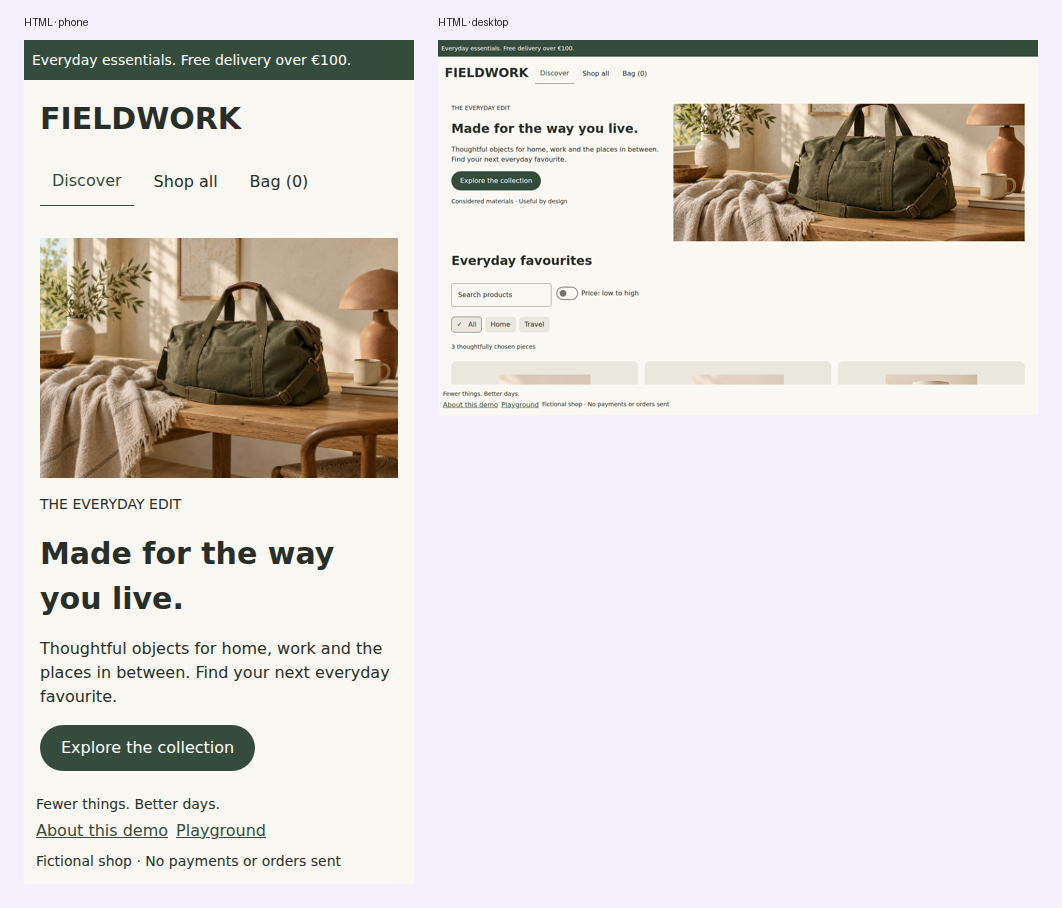
Fieldwork is a familiar shopping app with search, category filters, product pages, a bag and validated demo checkout. The same feature code adapts from a phone to a wide browser. It uses fictional products and sends no payments or orders.
Follow the shopping walkthrough, explore components, or try the navigation recipes.
Keep the API simple
@Composable
fun ProductActions(name: String, price: String, onAdd: () -> Unit) {
    DomposableColumn(gap = 12.dp) {
        DomposableText(name, style = DomposableTextStyle.Title)
        DomposableText(price)
        DomposableButton("Add to bag", onAdd)
    }
}
Follow the call from shared code to its platform renderer. Install a provider around the feature. Theme tokens set your product's colors, type and spacing; replace individual component renderers or supply a complete design system. Use measured content widths for adaptive layouts.
Bring your architecture
Screens return Unit. Pass plain state and callbacks, a model, a ViewModel or a store. Your app owns dependencies: manual factories, Metro, Koin and other DI choices can stay at its boundary. Screen entries and Navigation 3 are optional; KSP generates registration helpers without creating business logic or injection rules.
The Metro and Koin examples compile on all six targets. The runnable Kobweb example exports static index, contacts and contact-detail pages, tested with browser JavaScript disabled and enabled. See the compatibility table for tested versions and platform differences.
Before 1.0: APIs may change in minor releases. Use a published version from Releases for Maven dependencies and the signed APK demo. 0.0.0 is the unpublished bootstrap baseline. The repository also includes runnable HTML, Wasm and native examples.